
How Durable Berthing Furniture Supports Naval Operations
QUICK ANSWER: Durable berthing furniture supports naval operations by keeping crew rested, keeping personal gear and emergency equipment organized, and staying in service through years of salt air, vibration, and deployment tempo without pulling maintenance hours away from the mission. Aluminum frames with powder coat finishes, shock certified mounts where the program calls for them, and built in storage for lockers, drawers, and escape breathing devices all feed directly into readiness. A berth that holds up means fewer repair requests, fewer compartment closures, and a crew that reaches the watch bill rested and ready.
Every vessel has a compartment that nobody mentions in a mission briefing but everybody depends on. It is the berthing space, where a crew member gets the few hours of sleep that make the next watch safe. When a rack frame loosens, a latch corrodes, or a locker door stops closing, the problem does not stay in the compartment. It shows up as a work order, a tired sailor, and a repair team pulled away from something else.
Port engineers, outfitting contractors, and procurement officers see this pattern across ship classes. Berthing furniture is rarely the most visible item in an outfitting package, yet it is one of the few items that every crew member touches every single day for months at a time. That daily contact is exactly why durability matters more here than almost anywhere else below deck.
Berthing Is Part of the Operating System of the Ship
A ship runs on people, and people run on rest and order. Berthing furniture sits at the point where those two needs meet. The rack is where the crew sleeps. The locker is where uniforms, boots, and personal items stay secured when the ship rolls. The drawer, the light, the fan, and the curtain are the small provisions that make a shared compartment usable at any hour, including when part of the crew is asleep and the rest is coming off watch.
When furniture in that space is built to hold up, it works quietly. Nobody thinks about it, which is the goal. When it fails, the failure spreads. A damaged rack may be taken out of service, which forces a crew to shift to a different compartment. A locker that will not latch can release its contents in heavy seas. A loose fitting becomes a snag point in a passageway that has to be cleared quickly during an emergency. Durable berthing furniture keeps all of those small failures from stacking up into an operational problem.
What Durability Actually Means Below Deck
Durability on a ship is not the same as durability in a warehouse or a barracks ashore. The berthing compartment faces a combination of stresses that land furniture rarely sees together.
Salt Air And Humidity
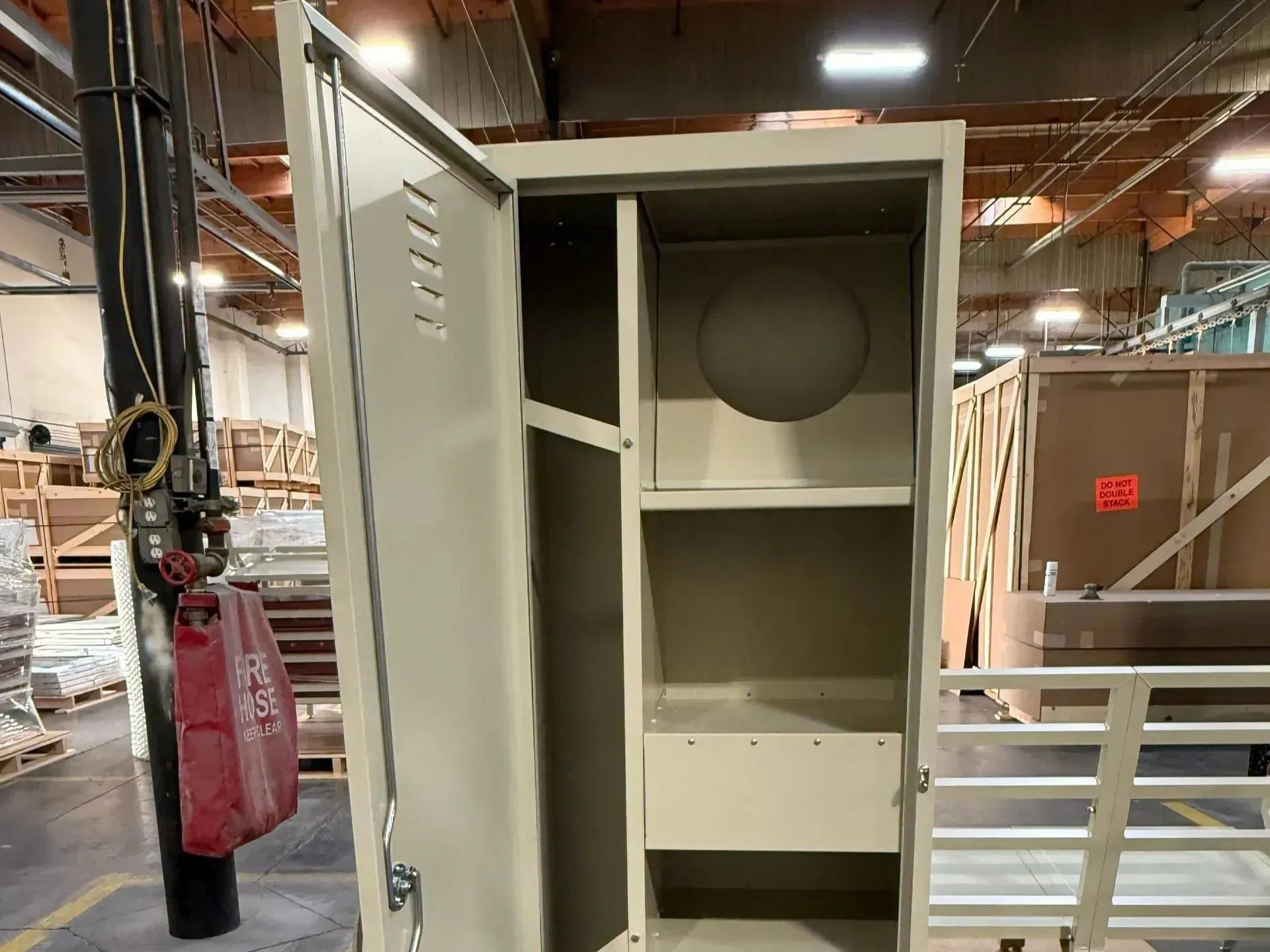
Even inside the hull, moist salt laden air finds its way into every compartment. Steel without a protective finish begins to rust, and fasteners and hinges are often the first places it shows. Aluminum construction paired with a powder coat finish gives the furniture a surface that is built to resist salt air and humidity, which is why it is the standard choice for berth and locker lines built to naval drawings.
Weight And Strength
Aluminum offers a strong strength to weight ratio compared with steel. On a vessel, every pound of furniture is a pound that has to be accounted for in the ship's weight and stability picture, and a multi tier berth stack adds up quickly across hundreds of racks. Lighter frames that still carry the load are a practical advantage during installation and over the life of the ship.
Vibration And Motion
Engines, propulsion, and weather transmit constant low level motion through the structure. Furniture that is bolted, welded, and fastened correctly stays tight. Furniture that is not will work loose over time, producing rattles at best and failures at worst.
Shock
For vessels where shock performance is part of the requirement, the berth has to hold together and stay attached to the deck when the hull takes a hit. A shock certified option on the lightweight modular berth line uses reinforced frames and shock certified mounts, with welds and fasteners checked against the naval drawings.
Tip:
When you review a berthing package, look past the frame and check the small parts. Hinges, latches, door stays, and fasteners fail before frames do, and they are the parts a crew notices first. A finish and hardware set that matches the frame material keeps the whole unit working at the same pace.
Modular Berth Units Built for High Density Compartments
Most large vessels house enlisted crew in modular stacks, and the lightweight modular berth unit is the workhorse of that arrangement. The line is offered in two high and three high configurations with different locker counts, so a compartment can be matched to the number of crew it has to hold. Part number B221 is a two high unit with two lockers, B321 is a three high unit with two lockers, and B331 is a three high unit with three lockers. All three follow the lightweight modular berth drawing at its current revision.
The operational value of a modular design shows up in three places.
Installation
Modular units can be brought aboard and set in place as complete assemblies rather than built up piece by piece in a cramped compartment. That matters when an availability window is fixed and every day of crane time and compartment access counts.
Repair
When a unit is damaged, a modular design lets a team address the affected unit instead of tearing out a whole compartment layout.
Consistency
A compartment fitted with the same unit throughout is easier for a crew to live in, easier for a supply department to support, and easier for a maintenance team to learn once and apply everywhere.
Carrier berthing renovations that involve 700 or more modular berth units show how much this matters at scale. A design that installs cleanly and holds up in service repeats its advantage with every unit.
Officer Staterooms, Transom Berths, and the Senior Officer Cabin
Officer berthing follows the same durability logic with a different arrangement. The officer stateroom berth is offered as a single (part number 3103) or double (part number 3104) in Size 1 or Size 2, with three lower storage drawers, a removable lee rail, and a spring unit. Those lower drawers turn what would be dead space under the sleeping surface into working storage, which is a real gain in a stateroom that has to serve for sleep, work, and stowage in one footprint.
The fold down transom berth for officers works on a different principle. The back folds down to form the sleeping surface, and the unit still carries three lower storage drawers. In a compartment that doubles as workspace during the day, that flexibility lets the room do more than one job. Vinyl upholstery on the transom berth gives the sitting surface a finish that can be wiped clean.
For the senior officer cabin, the stateroom bed (part number 3111) pairs a bed frame, box spring, and mattress with a headboard that includes storage and a high pressure laminate top. Each of these pieces is built to a Hull Type Drawing, which keeps the item interchangeable with what the compartment was designed to receive.
Small Provisions That Carry Real Operational Weight
The features around a berth are easy to treat as extras. In practice they are the details that make a compartment livable and safe.
Lee Straps And Lee Rails
In rough seas, a sleeping crew member needs to stay in the rack. Lee straps and removable lee rails provide that restraint without making the berth hard to enter.
Berth Lights
An adjustable light lets a crew member read or complete administrative tasks without lighting the whole compartment, which protects the sleep of everyone else.
Fans
A berth fan gives localized airflow in a space that can run warm and stale. Part number 76D1 is the fan made for the lightweight modular berth unit.
Curtains
A curtain gives a measure of privacy in a shared space, and it keeps light from the passageway out of the rack.
EEBD storage
The berth storage container for an Emergency Escape Breathing Device (part number 0224 for the lightweight modular unit) keeps that equipment at the rack, where a crew member can reach it fast in the dark.
Warning: Treat emergency equipment storage as a placement decision, not an afterthought. An escape breathing device container that is hard to reach, mounted in a spot that gets blocked by bedding, or fitted with a latch that sticks can slow a response when seconds matter. Confirm the location, the latch, and the access path with the people who will use it before the order is released.
Durability and the Refit Window
Naval maintenance runs on schedules that do not move easily. An availability has a start date and an end date, and every system aboard competes for time, space, and labor inside it. Berthing furniture that arrives on time, fits the compartment, and installs without rework protects that schedule. Furniture that arrives late or needs field modification eats into time that other trades were counting on.
Lead time is part of that picture. A standard turnaround of 30 to 90 days, supported by an inventory of key components, gives planners something concrete to build around. Large programs such as the Coast Guard's 25 vessel Offshore Patrol Cutter program, and the berthing, office, and dining packages for JHSV and T EPF vessels, depend on that predictability across many hulls over several years.
Durability extends that benefit beyond delivery. A set of berths that stays tight, clean, and corrosion free through a full deployment cycle does not generate follow on work during the next availability. The maintenance team that would have spent days repairing or replacing racks can spend that time on systems that cannot be deferred.
Matching Berthing Furniture to the Mission
No single berth fits every vessel. A destroyer, a cutter, a carrier, and a support ship each place different demands on the compartment. Before you specify, work through a short set of questions. How many crew members does the compartment need to hold, and in what grades? Does the program call for shock certification, and for which units? Which Hull Type Drawing and revision apply to the vessel? What options does the crew need at each rack, such as lights, fans, curtains, and emergency equipment storage? And what are the compartment's overhead height and access constraints?
Answering these early lets a manufacturer confirm feasibility and commit to a realistic delivery date rather than a placeholder range.
Frequently Asked Questions
Why does durable berthing furniture matter to naval operations?
Berthing is where the crew rests and stores its gear. Furniture that holds up through salt air, vibration, and long deployments keeps racks and lockers in service, reduces repair work, and protects crew rest, all of which support readiness.
What materials are best for shipboard berthing furniture?
Aluminum with a powder coat finish is widely used because it offers a strong strength to weight ratio and resists salt air and humidity. The right choice for a specific vessel still depends on the program drawings and requirements.
What is a lightweight modular berth unit?
It is a stacked berth assembly offered in two high and three high configurations with built in lockers. Models B221, B321, and B331 differ by tier count and locker count, and all are built to the lightweight modular berth drawing.
Is shock certified berthing available?
Yes. A shock certified option is offered for the lightweight modular berth units, using reinforced frames and shock certified mounts, with welds and fasteners checked against the naval drawings.
What options can be added to a berth?
Common options include lee straps, adjustable berth lights, berth fans, curtains, storage drawers, lockers, and storage for an Emergency Escape Breathing Device.
How long does it take to receive berthing furniture?
Standard turnaround is 30 to 90 days, supported by an inventory of key components. The firm date depends on scope, quantities, and how complete the drawing package is when the order is placed.
Berthing Built to Keep the Crew Ready
Durable berthing furniture supports a ship in ways that rarely appear in a mission briefing. Aluminum frames with powder coat finishes resist salt air and humidity, modular units install cleanly inside a fixed availability window, and lockers, drawers, lights, and escape breathing device storage keep each rack functional. When these pieces hold up through vibration and long deployments, crews get the rest they need and maintenance teams spend their hours on systems that cannot wait.
Spec-Built Systems Inc.
has built MIL SPEC compliant berthing furniture from San Diego, CA for over 40
years, and the programs that run best settle their details early. Hull Type Drawing references, unit counts, option selections, and any shock certification needs are confirmed before production starts, which keeps delivery predictable across many hulls. A berth that stays tight and corrosion free through a full deployment cycle rarely draws attention, and that quiet reliability is exactly what a working compartment calls for.